Power Transmission
Power transmission components carry rotary motion and torque between shafts and driven equipment. Correct profile, alignment, tension, fit and load selection help the complete drive operate smoothly.
10 products
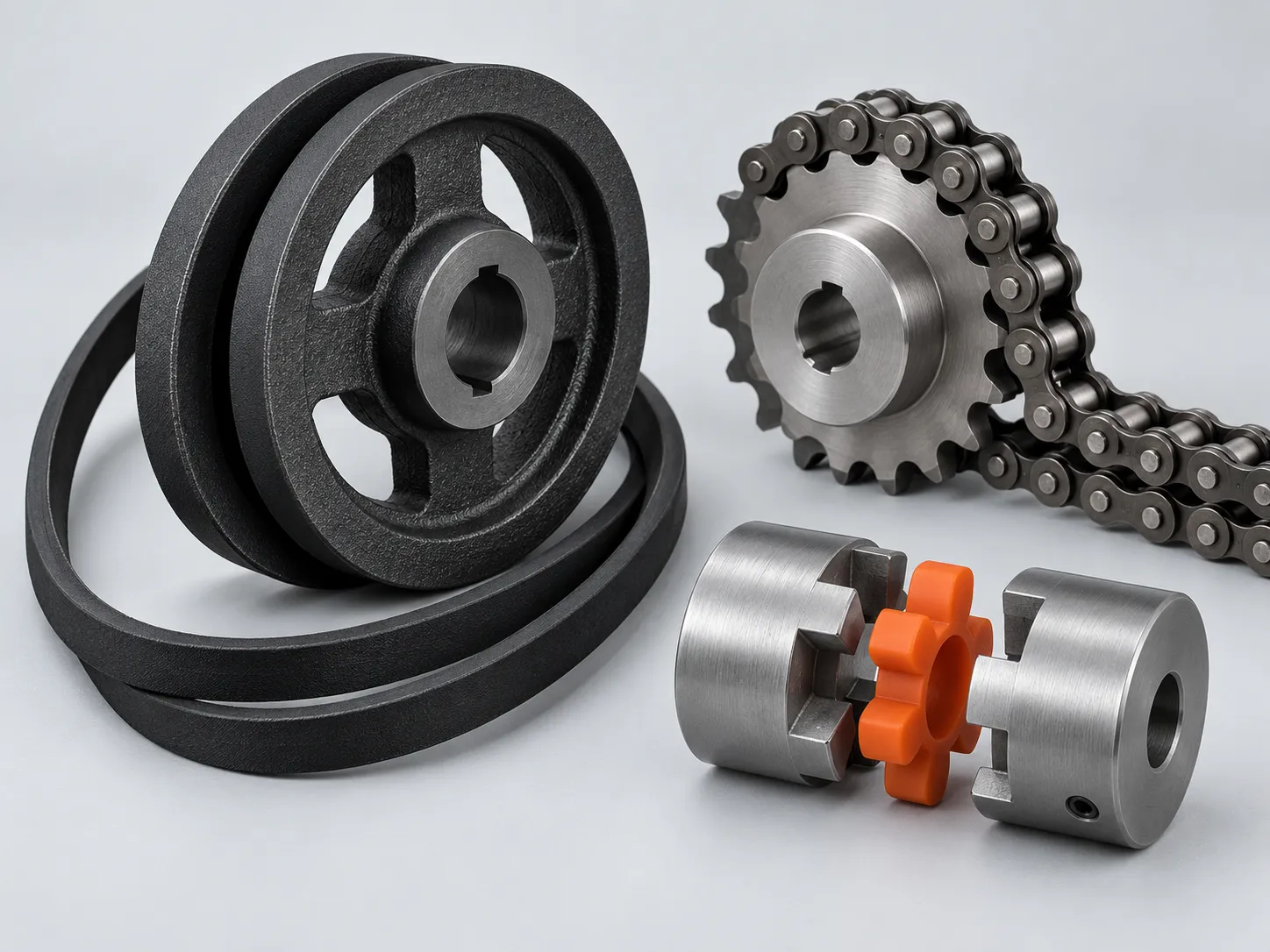
Browse power transmission
V-BeltsV-belts are endless flexible drive belts with a trapezoidal section that wedges into matching pulley grooves. Multi-Ribbed BeltsMulti-ribbed belts are thin endless belts with many lengthwise micro-V ribs that engage matching grooved pulleys. Timing BeltsTiming belts are endless toothed belts that mesh positively with profiled pulleys to maintain a fixed speed ratio and angular relationship. V-PulleysV-pulleys are grooved wheels whose angled rim channels guide matching V-belts and transfer torque to or from a shaft. Taper-Bush PulleysTaper-bush pulleys are grooved belt wheels with a conical hub seat for a removable split bush. Roller ChainsRoller chains are articulated steel drives made from inner and outer plates, pins, bushes and freely turning rollers. SprocketsSprockets are toothed wheels whose shaped teeth engage roller-chain rollers to drive or follow a shaft. Flexible CouplingsFlexible couplings are shaft connectors that transmit torque while accommodating limited angular, parallel or axial misalignment. Bushes & HubsBushes and hubs are mounting components that connect pulleys, sprockets, couplings or fabricated rotors to cylindrical shafts. Shaft Locking DevicesShaft locking devices are frictional clamping assemblies that secure a smooth shaft to a hub without relying on a conventional key. Questions about power transmission
What details should I send for a belt drive quote?
Provide the belt markings, cross-section, effective or pitch length and quantity. Add pulley diameters, groove count, centre distance, motor power and shaft speeds if the drive is being selected rather than copied. Photographs help distinguish wrapped, cogged, ribbed and toothed constructions.
How do I identify a roller chain and sprocket?
Measure chain pitch, roller diameter and inner width, then note the number of strands. For the sprocket, provide tooth count, bore, keyway, hub form and chain standard. Existing markings are useful, but worn chain dimensions should be checked cautiously.
Why is shaft alignment important for drive parts?
Misalignment changes how loads are shared across belts, chain teeth, coupling elements and bearings. It can produce heat, vibration and uneven wear. Check angular and offset alignment, shaft runout, pulley or sprocket condition, and mounting tightness before tensioning a replacement drive.