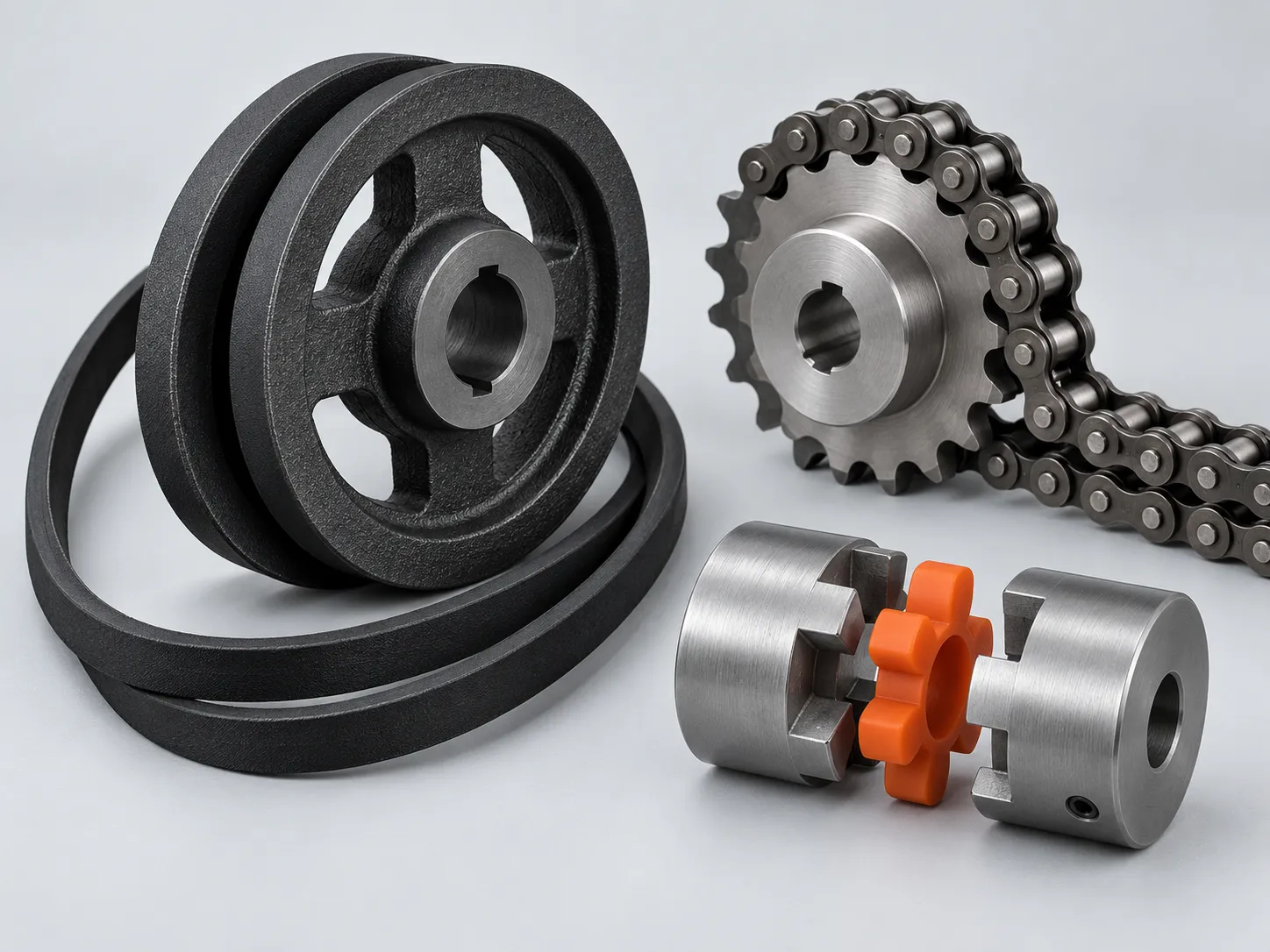
Representative image of shaft locking devices
Representative image

Shaft Locking Devices

Shaft locking devices are frictional clamping assemblies that secure a smooth shaft to a hub without relying on a conventional key. Tightening multiple high-strength bolts draws opposed tapers together, creating radial contact pressure for a concentric, adjustable and backlash-free mechanical connection.

Key facts

Common types
Self-centring locking assembly, Non-self-centring assembly, Two-piece shrink disc, Three-piece shrink disc, Rigid locking coupling
Materials
Heat-treated alloy steel, Carbon steel, High-strength steel bolts, Nickel-plated steel, Stainless steel
Used in
Conveyor pulley shafts, Gearbox hollow shafts, Servo drives, Wind turbines, Printing rollers
Types

  • Self-centring locking assembly
  • Non-self-centring assembly
  • Two-piece shrink disc
  • Three-piece shrink disc
  • Rigid locking coupling

Materials

Applications

  • Conveyor pulley shafts
  • Gearbox hollow shafts
  • Servo drives
  • Wind turbines
  • Printing rollers

What to send for a quote

  • shaft and hub diameters
  • required torque and thrust
  • mounting arrangement
  • available axial space
  • bolt and finish requirements

Questions about shaft locking devices

What should I send to identify shaft locking devices?

Send shaft and hub diameters, required torque and thrust, mounting arrangement, available axial space, bolt and finish requirements. Provide actual shaft and hub tolerances and material strengths, not only nominal diameters, so contact pressure can be assessed. A clear photograph, drawing or readable reference can resolve details that dimensions alone do not show.

How should I select shaft locking devices?

Size the device from shaft and hub strength, torque, axial force, bending, speed, surface condition and assembly space. Confirm the mating parts and operating environment before ordering, since an apparently similar size can use a different profile, material or internal arrangement.

Last updated: