Seal materials compared: PU, NBR, FKM, EPDM, silicone, PTFE and POM
Seal material selection begins with the fluid, temperature, pressure, speed and hardware, not colour or appearance. PU, NBR, FKM, EPDM, silicone, PTFE and POM each solve a different part of the problem. This guide gives a practical first comparison before application details are confirmed.
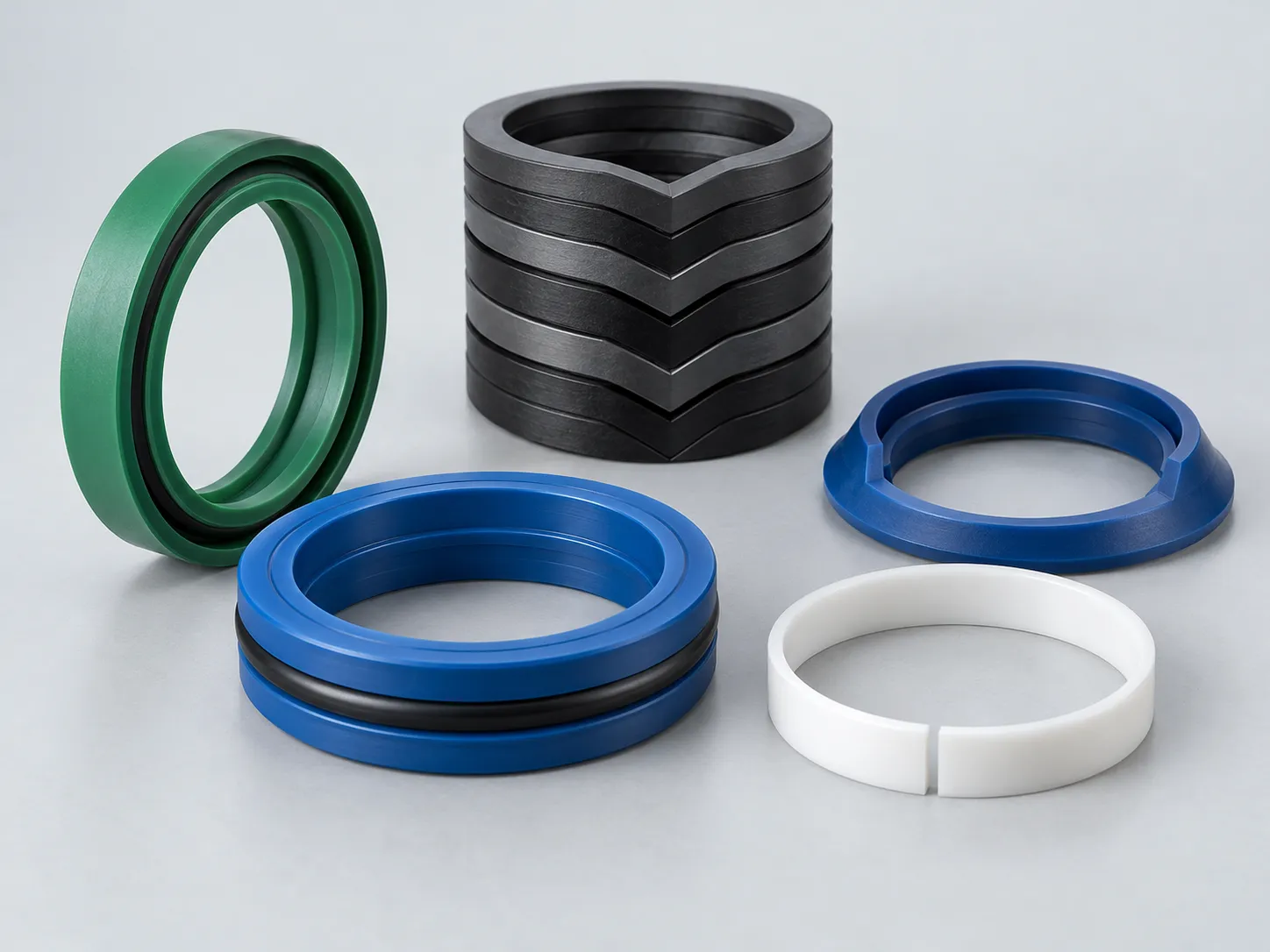
How do common seal materials compare?
| Material | Best at | Good with | Avoid with | Typical parts |
|---|---|---|---|---|
| PU | Wear, extrusion resistance and resilient dynamic lips | Mineral hydraulic oils and many general duties | Strong acids, ketones and duties outside the selected grade data | Rod seals, piston seals, wipers, coupling elements |
| NBR | General oil sealing with good elasticity and value | Mineral oils, greases, water in suitable grades | Ozone, weathering and many polar solvents | O-rings, oil seals, energisers, static seals |
| FKM | Heat and many aggressive oil or fuel duties | Mineral oils, fuels and many chemicals | Hot water, steam, ketones and some amines | O-rings, rotary seals, high-temperature seals |
| EPDM | Water, steam and outdoor exposure | Water, glycol fluids and weathering | Mineral oils, fuels and hydrocarbon greases | Water seals, brake-fluid seals, gaskets |
| Silicone | Wide temperature range and low-temperature flexibility | Air, weathering and selected food duties | Abrasion, high dynamic wear and many fuels | Static seals, low-load seals, food equipment |
| PTFE | Low friction and broad chemical resistance | Many chemicals, high speed and dry running in suitable designs | Unfilled grades under high wear or creep loads | Slide rings, rotary seals, back-up rings, strips |
| POM | Rigid guiding and anti-extrusion support | Mineral oils and mechanical guide duties | Strong acids, high heat and dynamic sealing as a flexible lip | Guide rings, wear rings, back-up rings |
How should you choose a seal material?
- Identify every fluid, cleaner and contaminant that can touch the seal.
- Record minimum, normal and maximum temperatures at the seal.
- Confirm pressure, speed, stroke, frequency and extrusion clearance.
- Inspect the rod, bore and groove finish for damage or wear.
- Compare compound data and confirm a production grade for the complete duty.
Published temperature ranges are typical only. Confirm the exact compound and application with its supplier.
Frequently asked questions
Can seal material be identified by colour?
No. Manufacturers use many colours and fillers, so colour is not a reliable compound identification method. Use the part record, equipment manual or material testing.
Which seal material has the widest chemical resistance?
PTFE resists many industrial chemicals, but the complete seal may include an elastomer energiser or metal spring. Confirm every material in the assembly against the fluid.
Can one compound cover every temperature and fluid?
No. Temperature limits, fluid compatibility, friction, elasticity and wear resistance trade against one another. Confirm the actual duty and use a supplier compound data sheet.
Need help matching a part?
Send the marking, dimensions, application and a clear photograph.