Industrial Components
Industrial components cover semi-finished polymers, flexible elements, compressor parts and made-to-drawing items used in machinery maintenance. This family also includes tools for controlled bearing fitting, removal, heating and alignment.
12 products
Browse industrial components
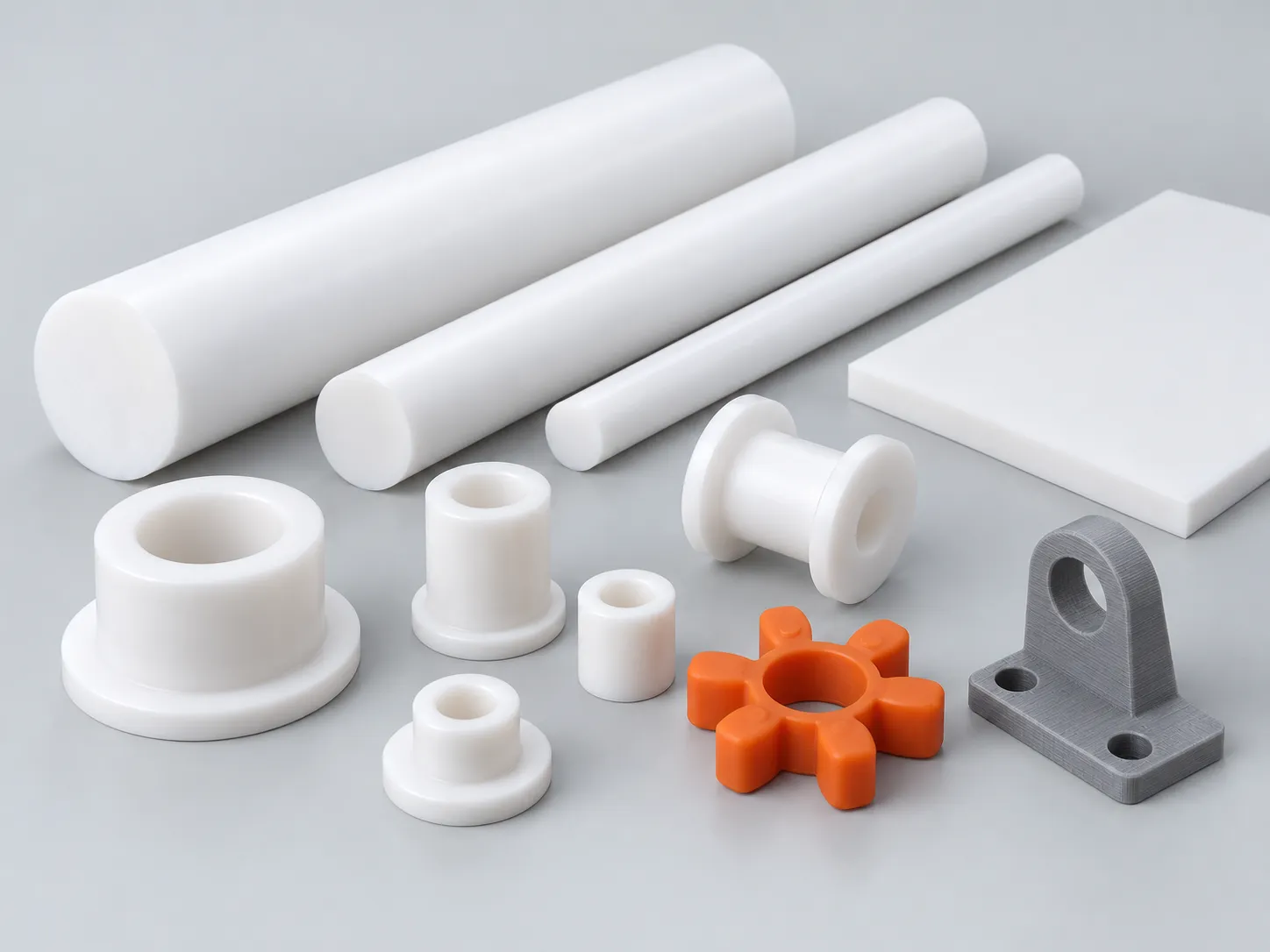
PTFE RodsPTFE rods are solid cylindrical fluoropolymer stock supplied for machining into seals, valve seats, insulators, bushes and other precision components. PTFE SheetsPTFE sheets are flat fluoropolymer stock produced as moulded plates, skived sheets or expanded material. Moulded PTFE BushesMoulded PTFE bushes are hollow fluoropolymer sleeves formed as near-net stock or finished bearings for rotary and linear support. Polyurethane Coupling ElementsPolyurethane coupling elements are resilient inserts fitted between the interlocking hubs of flexible couplings. Rubber Coupling ElementsRubber coupling elements are flexible inserts that connect or cushion rotating coupling members. Pneumatic & Compressor PartsPneumatic and compressor parts are precision sealing, guiding and valve components used in reciprocating or rotary air and gas equipment. 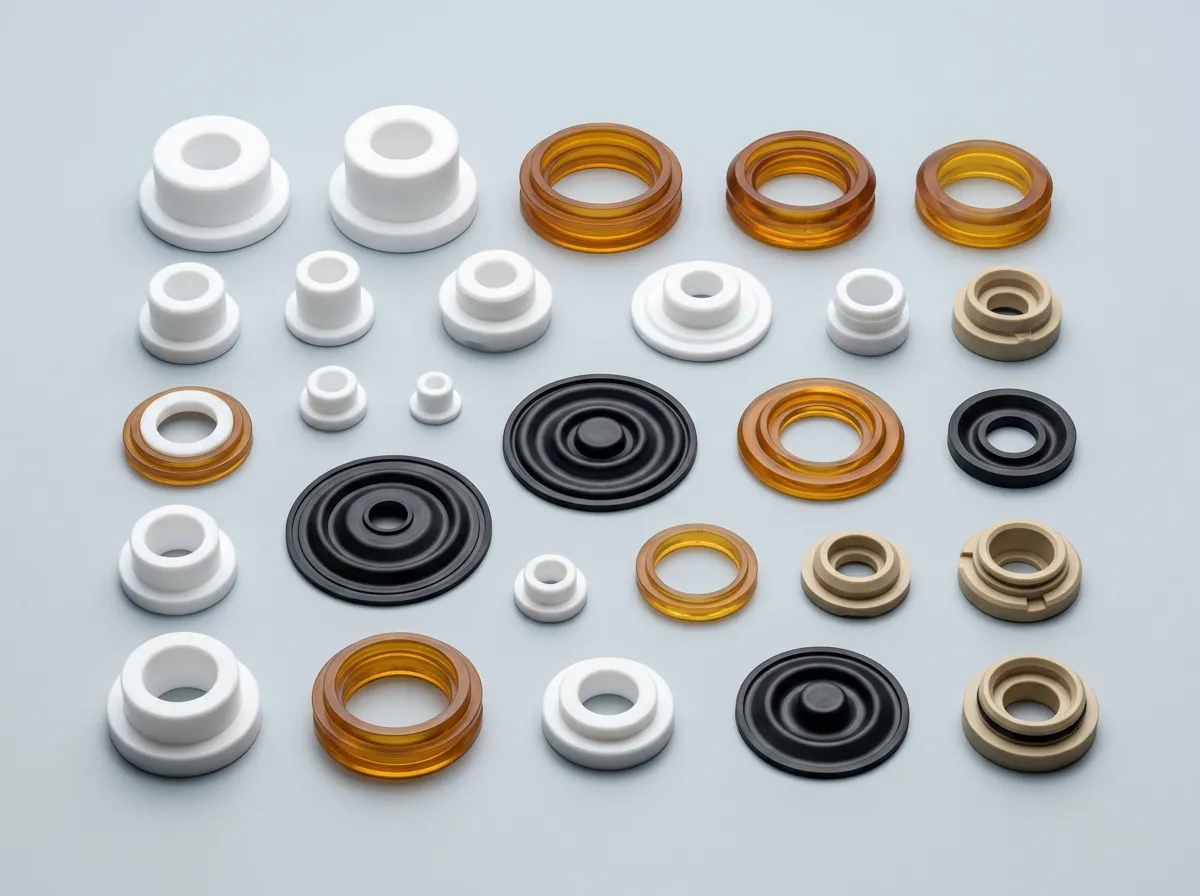 Custom Moulded & Machined PartsCustom moulded and machined parts are bespoke polymer, elastomer or composite components produced to a drawing, model or verified sample. 3D-Printed Industrial Parts3D-printed industrial parts are additively built polymer components created layer by layer from a digital model. Bearing Pullers & Fitting ToolsBearing pullers and fitting tools are mechanical devices that apply controlled force during bearing removal or installation. Bearing Induction HeatersBearing induction heaters are electrical tools that use an alternating magnetic field to warm conductive rings for expansion before shaft mounting. Hydraulic Nuts & PumpsHydraulic nuts and pumps are high-pressure mounting tools that apply controlled axial force to large bearings on tapered seats or sleeves. Shaft & Belt Alignment ToolsShaft and belt alignment tools are optical instruments that measure angular and offset error between coupled shafts or pulley faces.
 Questions about industrial components
What should I send for a bespoke industrial part?
Send a dimensioned drawing or CAD file, material requirement, quantity and tolerances. Describe the load, motion, mating parts, fluid, temperature and environment. A sample can help with geometry, but service conditions are still needed because appearance alone does not identify a suitable material.
When is a 3D-printed part suitable for industrial use?
Additive manufacturing is useful for prototypes, jigs, guards, ducts and complex low-volume components. Suitability depends on material, print process, layer direction, sealing requirements and load. Critical pressure boundaries or safety parts require careful engineering validation before use.
Which tools help prevent bearing installation damage?
Fitting tools apply force to the ring with the interference fit, pullers remove components evenly, and induction heaters expand metal without open flames. Hydraulic tools assist larger tapered seats. Alignment instruments then help correct shaft or belt geometry after assembly.