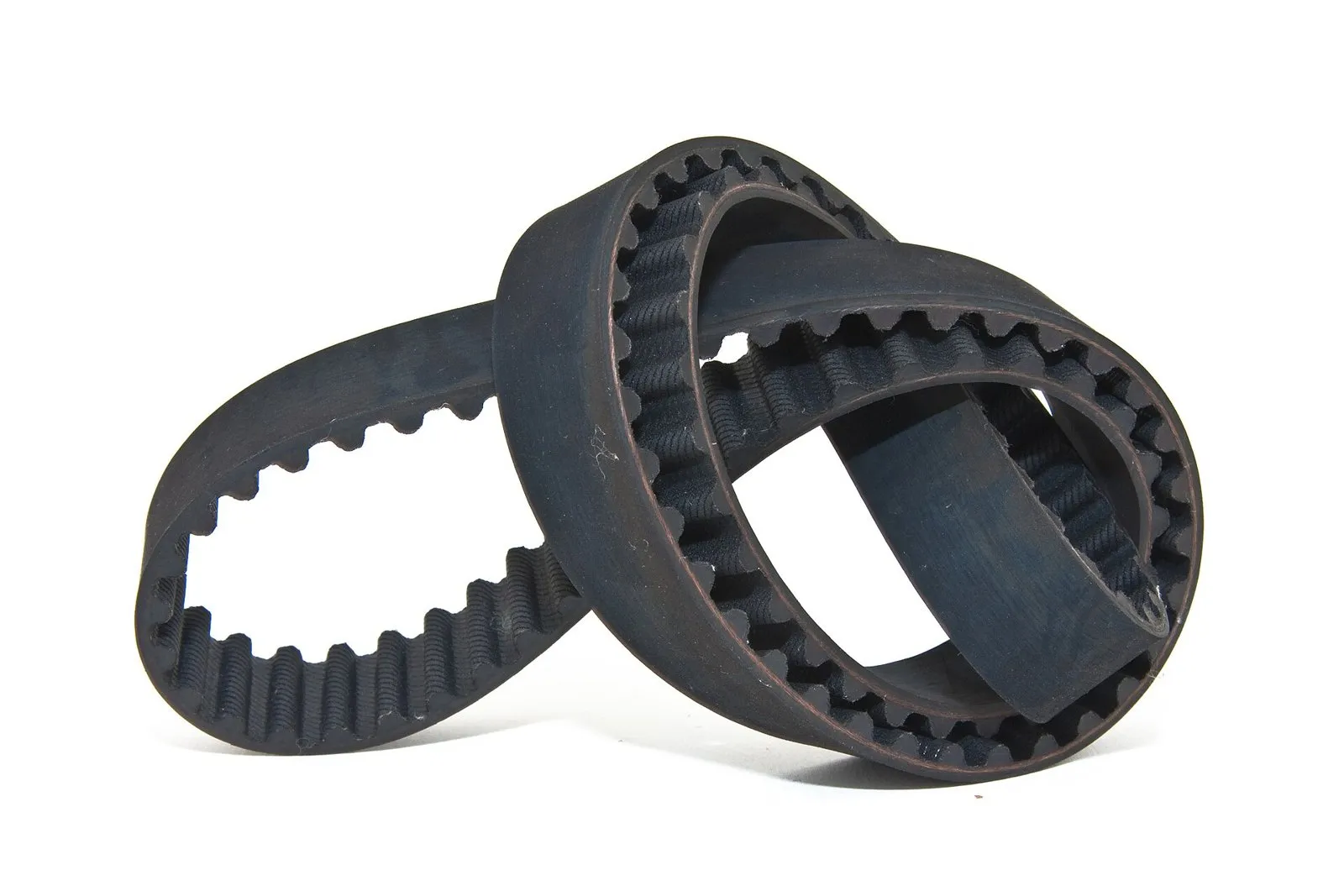
Representative image of timing belts
Representative image

Timing Belts

Timing belts are endless toothed belts that mesh positively with profiled pulleys to maintain a fixed speed ratio and angular relationship. Their tensile cords limit stretch, while shaped teeth transmit motion without intentional slip in indexing, automation, engine and positioning drives.

Key facts

Common types
Trapezoidal tooth, Curvilinear tooth, Metric polyurethane belt, Double-sided belt, Open-ended belt, High-torque profile
Materials
Neoprene, Polyurethane, Glass-fibre cord, Steel cord, Aramid cord, Polyamide facing
Used in
CNC axes, 3D printers, Packaging machines, Robotics, Textile machinery, Engine timing
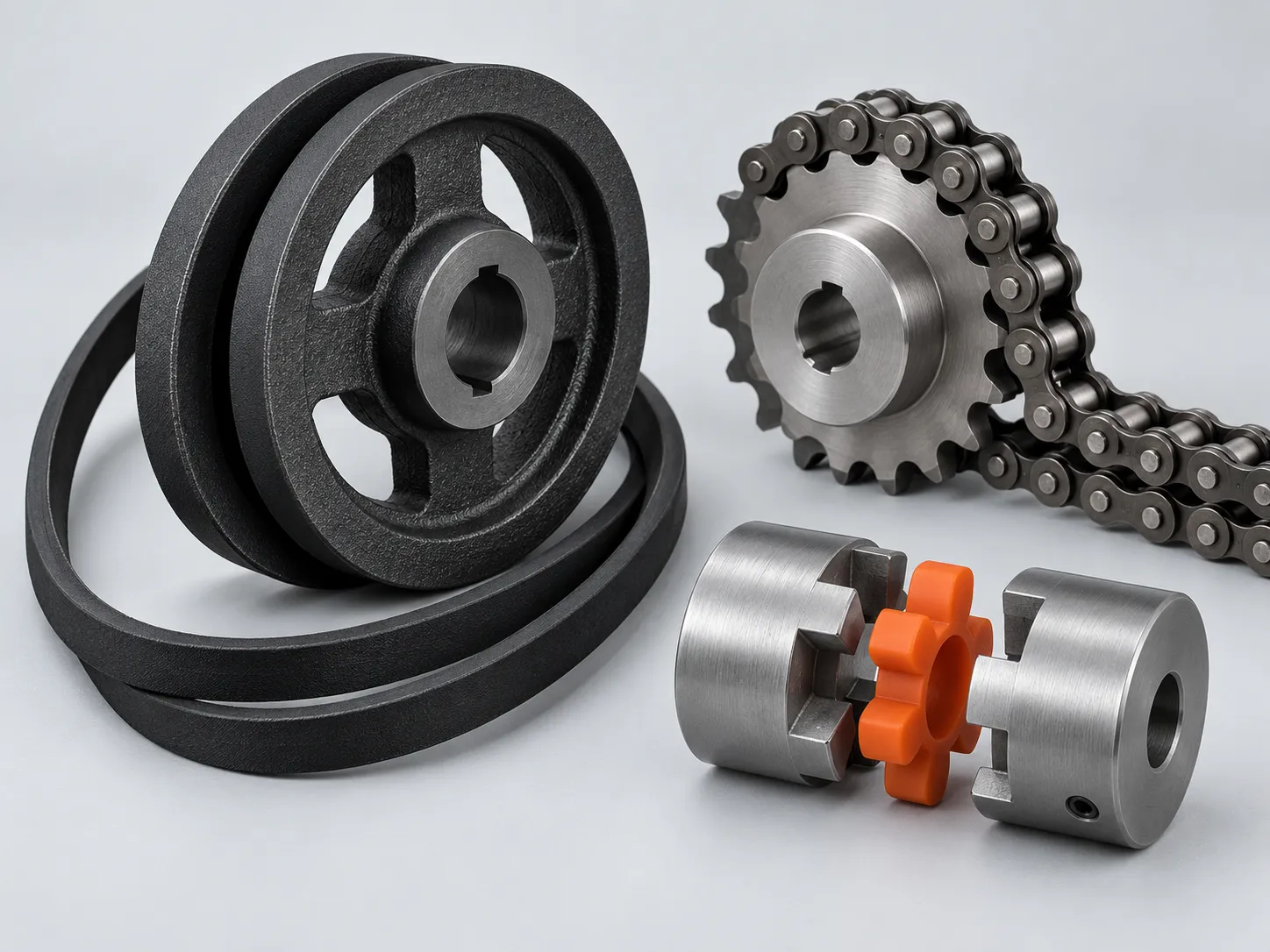
Types

  • Trapezoidal tooth
  • Curvilinear tooth
  • Metric polyurethane belt
  • Double-sided belt
  • Open-ended belt
  • High-torque profile

Materials

Applications

  • CNC axes
  • 3D printers
  • Packaging machines
  • Robotics
  • Textile machinery
  • Engine timing

What to send for a quote

  • tooth profile and pitch
  • pitch length
  • belt width
  • material and cord
  • pulley tooth counts

Questions about timing belts

What should I send to identify timing belts?

Send tooth profile and pitch, pitch length, belt width, material and cord, pulley tooth counts. Provide tooth pitch and shape, since equal-length belts with different tooth geometry cannot mesh with the same pulleys. A clear photograph, drawing or readable reference can resolve details that dimensions alone do not show.

How should I select timing belts?

Choose profile, pitch, width and reinforcement from torque, speed, positioning accuracy, pulley sizes, environment and tensioning. Confirm the mating parts and operating environment before ordering, since an apparently similar size can use a different profile, material or internal arrangement.

Last updated: