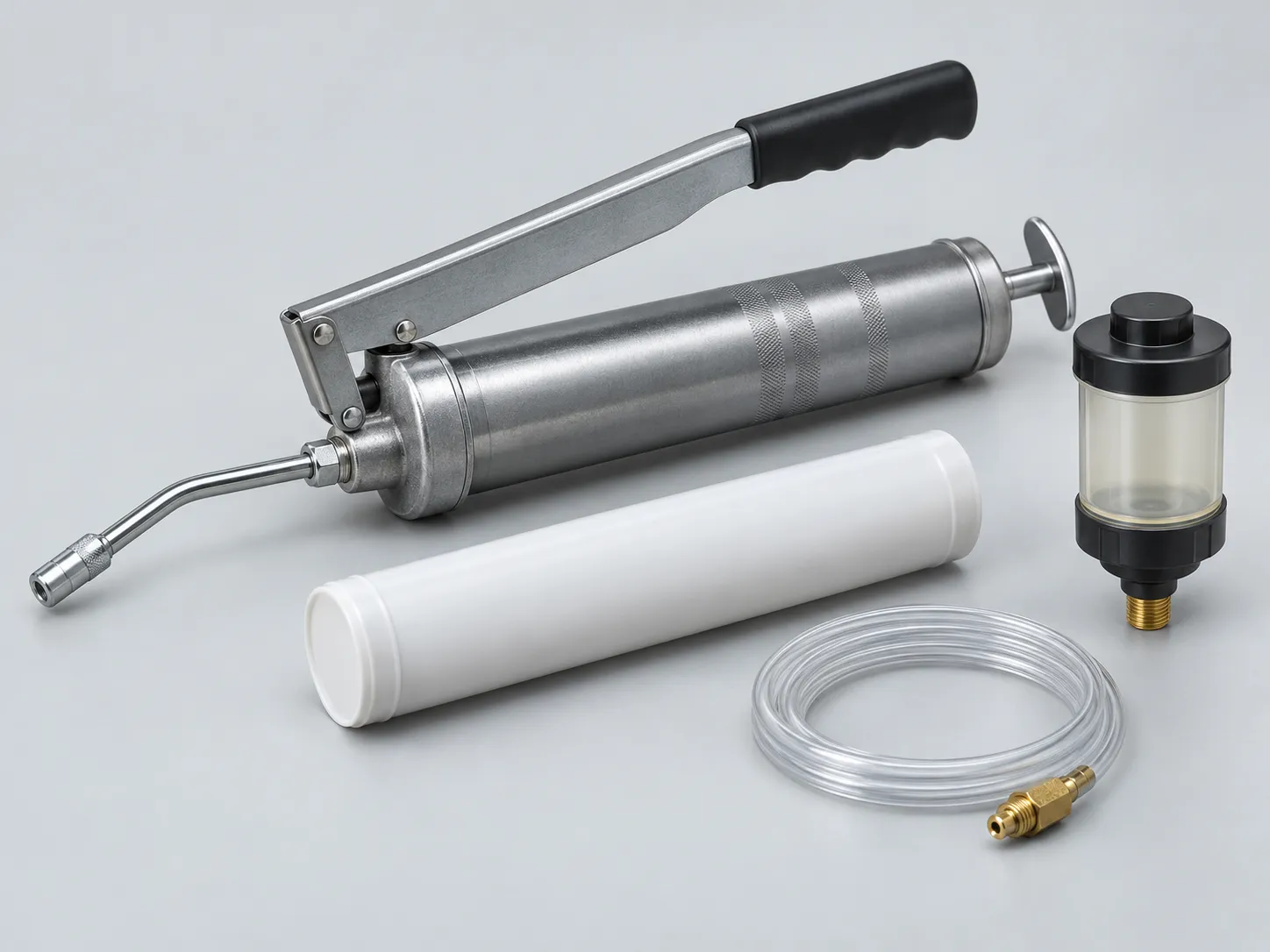
Representative image of progressive lubrication systems
Representative image

Progressive Lubrication Systems

Progressive lubrication systems are centralised networks whose feeder pistons move in a fixed sequence, dividing pump output among several points. Because each metering event depends on the previous piston completing its stroke, a cycle indicator can reveal interruption caused by a blocked outlet.

Key facts

Common types
Modular feeder, Monoblock feeder, Master-secondary network, Compact vehicle system, Monitored progressive system
Materials
Carbon steel feeder, Stainless steel feeder, Tool steel pistons, Polyamide tubing, Steel tubing
Used in
Construction equipment, Commercial vehicles, Wind turbines, Bottling machinery, Agricultural combines

Types

  • Modular feeder
  • Monoblock feeder
  • Master-secondary network
  • Compact vehicle system
  • Monitored progressive system

Materials

Applications

  • Construction equipment
  • Commercial vehicles
  • Wind turbines
  • Bottling machinery
  • Agricultural combines

What to send for a quote

  • point count
  • output per point
  • grease consistency
  • monitoring method
  • pump voltage and reservoir

Questions about progressive lubrication systems

What should I send to identify progressive lubrication systems?

Send point count, output per point, grease consistency, monitoring method, pump voltage and reservoir. Provide the feeder outlet map because changing one section can alter the delivery ratio across the complete progressive circuit. A clear photograph, drawing or readable reference can resolve details that dimensions alone do not show.

How should I select progressive lubrication systems?

Configure feeder sections and cycle rate from each point demand, lubricant, line resistance, machine sequence and fault monitoring. Confirm the mating parts and operating environment before ordering, since an apparently similar size can use a different profile, material or internal arrangement.

Last updated: