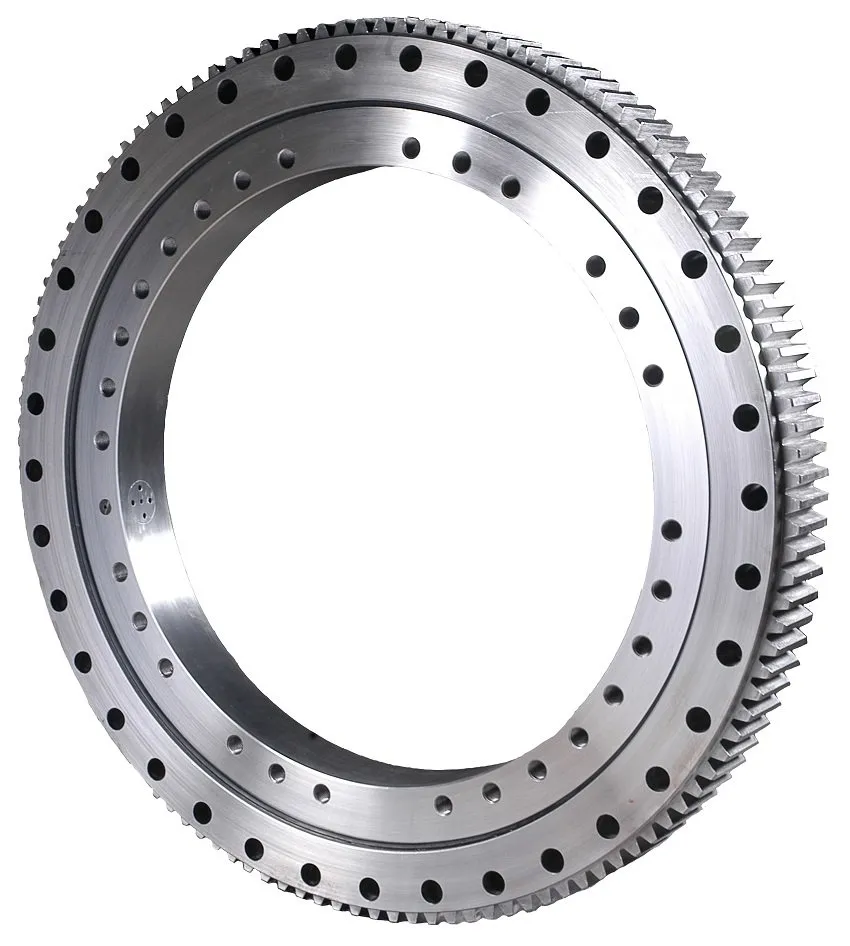
Representative image of slewing bearings
Representative image

Slewing Bearings

Slewing bearings are large-diameter rolling rings that support slow rotation or oscillation under combined axial, radial and overturning loads. Their rings include mounting holes and may carry internal or external gear teeth, allowing a structure and drive pinion to connect directly.

Key facts

Family
Bearings
Common types
Four-point ball ring, Double-row ball ring, Cross-roller ring, Three-row roller ring, Internal gear, External gear
Materials
Forged alloy steel, Induction-hardened steel, Carbon steel spacers, Polymer spacers, Elastomer seals
Used in
Excavators, Cranes, Aerial platforms, Wind turbines, Solar trackers, Turntables
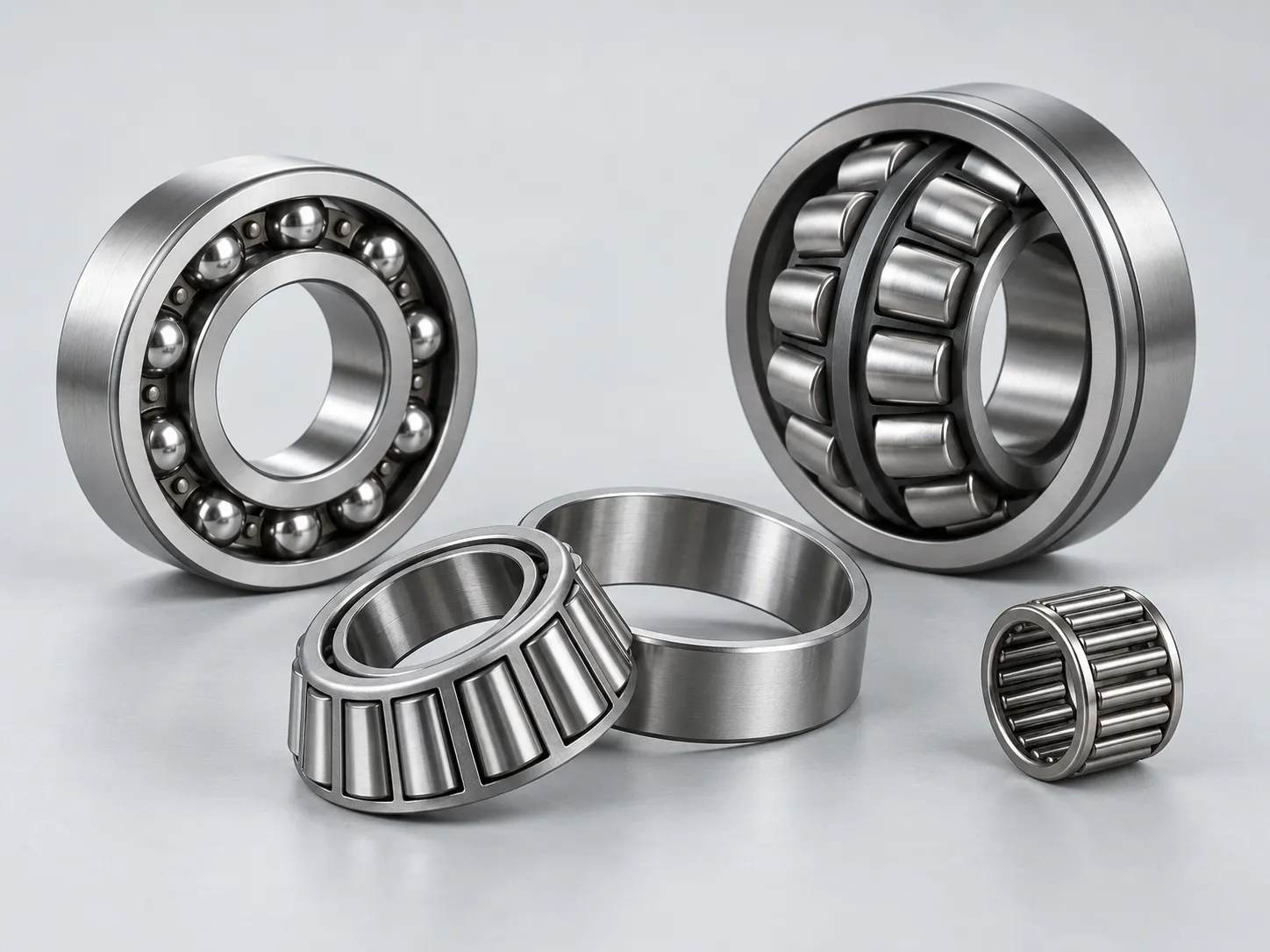
Types

  • Four-point ball ring
  • Double-row ball ring
  • Cross-roller ring
  • Three-row roller ring
  • Internal gear
  • External gear

Materials

Applications

  • Excavators
  • Cranes
  • Aerial platforms
  • Wind turbines
  • Solar trackers
  • Turntables

What to send for a quote

  • inside and outside diameters
  • overall height
  • gear data
  • mounting hole patterns
  • loads and overturning moment

Questions about slewing bearings

What should I send to identify slewing bearings?

Send inside and outside diameters, overall height, gear data, mounting hole patterns, loads and overturning moment. Provide both ring drawings, hole pitch circles, gear module and tooth count rather than only overall diameter. A clear photograph, drawing or readable reference can resolve details that dimensions alone do not show.

How should I select slewing bearings?

Choose rolling geometry and gear arrangement from load spectrum, moment, rotation pattern, stiffness, mounting structure and lubrication. Confirm the mating parts and operating environment before ordering, since an apparently similar size can use a different profile, material or internal arrangement.

Last updated: