How to read a bearing number
A bearing designation is a compact description of its basic type, dimension series, bore and special features. The familiar numbering system helps identify many standard metric bearings, but suffix meanings can vary by manufacturer. Always keep the complete marking and confirm it against current technical data.
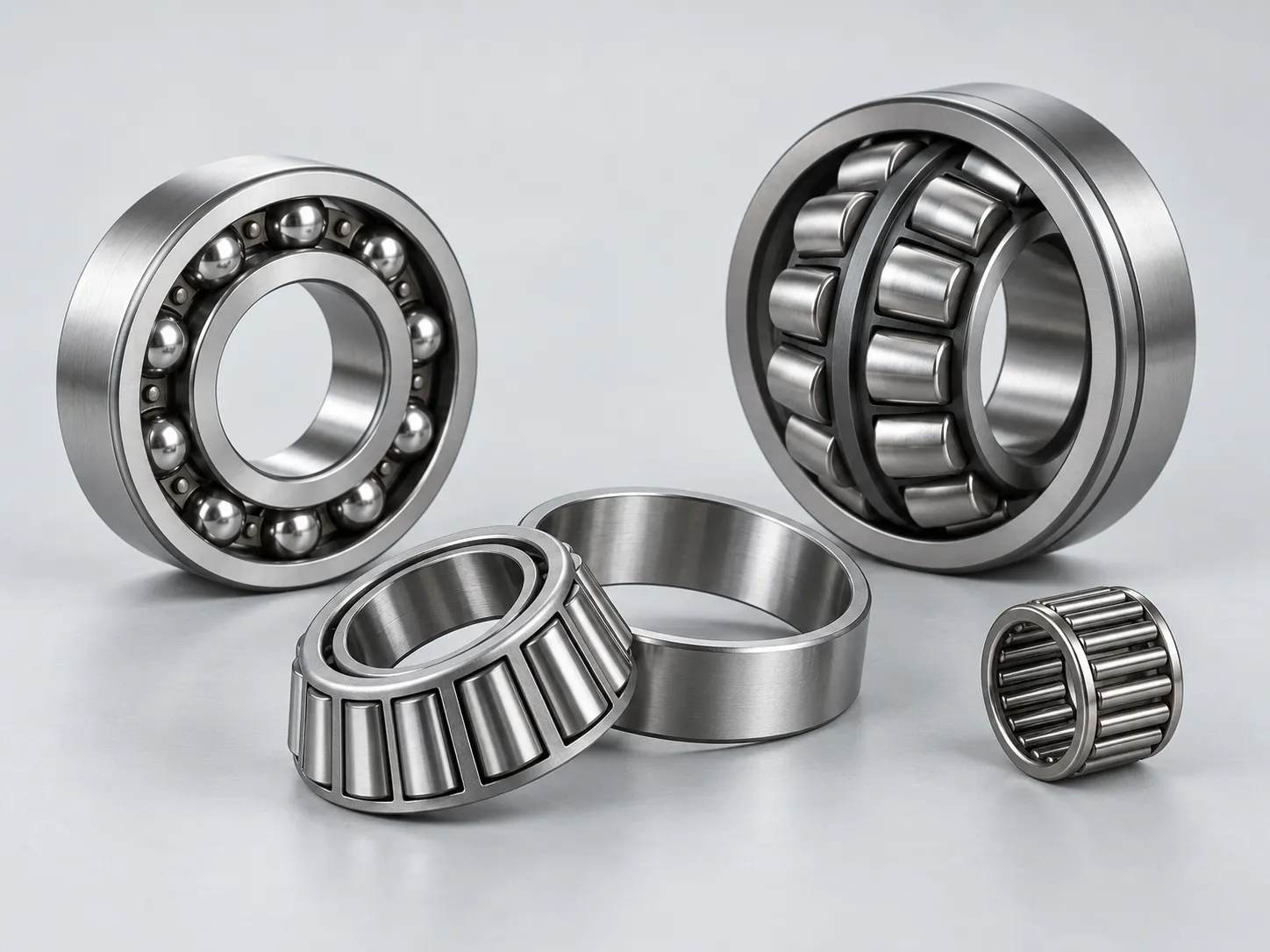
What do the basic bearing digits mean?
For many standard metric rolling bearings, the first digit indicates the bearing type, the following dimension-series digits describe the diameter and width series, and the final two digits give the bore code. This is a basic ISO designation pattern, not a complete interchangeability guarantee.
How does the bore code work?
Codes 00, 01, 02 and 03 usually mean 10, 12, 15 and 17 mm respectively. From code 04 upward, multiply the code by 5 mm. For example, 05 means 25 mm and 12 means 60 mm. Very small, large or special bores can use different notation.
What do 2RS, ZZ and C3 mean?
- 2RS: commonly indicates rubber contact seals on both sides.
- ZZ: commonly indicates metal shields on both sides.
- C3: commonly indicates radial internal clearance greater than normal.
Suffix conventions can vary. Confirm the manufacturer definition before substitution.
How do you read 6205-2RS?
In this worked example, 6 identifies a deep groove ball bearing, 02 is the dimension series, 05 gives a 25 mm bore, and 2RS indicates rubber seals on both sides. Outside diameter, width, clearance and seal construction still need confirmation.
Frequently asked questions
Does the same bearing number always mean the same internal design?
The basic boundary dimensions and type are standardised in many cases, but cage, seal, clearance, precision and internal details can differ. Keep all prefixes and suffixes.
What does C3 mean on a bearing?
C3 commonly indicates radial internal clearance greater than normal. It is not a quality grade and should only be selected when the fit, speed and operating temperature require it.
Can I identify a bearing only from bore, outside diameter and width?
Dimensions narrow the possibilities, but they do not identify internal geometry, clearance, sealing or precision. Use the complete designation and machine duty whenever possible.
Need help matching a part?
Send the marking, dimensions, application and a clear photograph.